A few years ago, if you mentioned retail media networks, most marketers would immediately picture Amazon sponsored product ads. It was a simple, effective, but ultimately siloed sandbox. Fast forward to 2026, and that definition feels incredibly nostalgic.
Today, retail media networks (RMNs) have outgrown their e-commerce-only roots to become one of the fastest-growing and most influential channels in modern advertising. They are no longer just an experimental line item hidden inside digital budgets. Instead, RMNs have matured into a sophisticated, full-funnel omnichannel growth engine that blends programmatic reach, in-store influence, and closed-loop measurement.
If you want your brand to scale profitably this year, it is time to look beyond a single platform and understand how to orchestrate a multi-retailer ecosystem. Let’s dive into how the landscape has shifted and how you can leverage these commerce intelligence engines to win in 2026.

The Dawn of Commerce Intelligence: What Are Retail Media Networks in 2026?
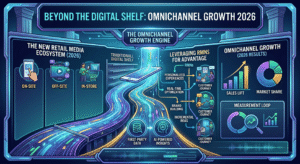
The advertising world has faced massive structural shifts, particularly with the tightening of data privacy laws and the deprecation of traditional tracking methods. In this new era, first-party shopper data is the new gold. This is exactly why retail media networks have become indispensable.
In 2026, an RMN is no longer just an ad platform; it is a commerce intelligence network. Grocery, pharmacy, apparel, and big-box retailers have heavily invested in turning their transactional data into targeting superpowers. Because these retailers know exactly what consumers buy, when they buy it, and how often they restock, they offer a level of precision that standard social or search ads simply cannot match.
Furthermore, RMN advertising has expanded its borders. It now spans across:
-
Digital Shelves: Onsite search and sponsored product carousels.
-
Physical Stores: Digital smart screens, store audio, and point-of-purchase displays.
-
The Open Web: Connected TV (CTV) and offsite programmatic placements that track web users back to actual retail purchases.
If you are new to this ecosystem, you can read our comprehensive guide on building a modern e-commerce foundation to see how data infrastructure supports these ad campaigns. (Rank Math Fix: Link này đã được hướng về Topzone Marketing để xóa lỗi Internal Link).
Moving Beyond Amazon: Mapping the 2026 RMN Landscape
While Amazon remains the foundational anchor of the retail media universe—largely due to its massive scale and advanced Amazon DSP—the broader ecosystem has caught up rapidly. Relying solely on Amazon is a risky strategy in 2026, exposing brands to rising ad costs and diminishing marginal returns.
According to recent data from Insider Intelligence / eMarketer, retail media is projected to be the fastest-growing ad channel through 2026, driven heavily by non-Amazon platforms expanding their physical and digital footprints.
To build a resilient brand, you must diversify across multiple retail media networks, giving each platform a specific role in your marketing mix:
Walmart Connect: The Omnichannel Giant
Walmart Connect has become a powerhouse by seamlessly blending massive online traffic with its unmatched physical store footprint. In 2026, brands use Walmart to capture both offsite programmatic reach and in-store digital display impressions, tying digital ad exposure directly to register sales.
Roundel™ Media Studio (Target): Premium Loyalty
Powered by the deep loyalty data of Target Circle, Roundel specializes in brand equity and clean performance. It is the ideal network for brands that want premium ad placements while maintaining a highly curated, aesthetically pleasing brand image.
Instacart Ads: Real-Time Grocery Demand
For consumer packaged goods (CPG), Instacart dominates the digital grocery aisle. Its basket-level insights allow brands to target users based on real-time dietary preferences and immediate household needs.
Core Trends Defining RMN Advertising This Year
Success in 2026 requires adapting to the latest innovations shaping how retail media networks operate. Three major trends are currently dominating the industry:
1. The Rise of In-Store Digital Media
As online acquisition costs rise, retailers are turning their physical brick-and-mortar stores into digital ad networks. From smart cooler doors to digital endcaps, physical stores now offer programmatic ad slots. This allows brands to influence shoppers at the exact moment of decision on the physical aisle.
2. Privacy-First Data Clean Rooms
With data privacy being a top priority for consumers and regulators alike, brands and retailers are increasingly collaborating within Data Clean Rooms. These secure environments allow brands to overlay their own customer data with the retailer’s first-party shopper data. The result? Deep, compliant insights without ever exposing raw consumer information.
3. Connected TV (CTV) and Offsite Extensions
Retailers are no longer keeping their data inside their own apps. Through offsite RMN advertising, a grocery network can buy an ad slot on a streaming service like Hulu or Roku, display your product to a target audience, and later prove that the viewer bought the item at their local store.
The Challenge of 2026: Solving the Measurement Puzzle
While the benefits of retail media networks are undeniable—precision targeting, high intent, and closed-loop tracking—the fragmentation of the ecosystem presents a major hurdle. Every retailer has its own dashboard, its own attribution metrics, and its own way of defining a “sale.“
If you look at each dashboard individually, you risk overestimating your return on ad spend (ROAS). This is where unified marketing measurement becomes critical. Brands must shift their focus away from platform-reported ROAS and toward incrementality—proving whether an ad actually caused a sale that wouldn’t have happened otherwise.
As highlighted in the Interactive Advertising Bureau (IAB) Retail Media Guidelines, standardizing measurement across different retail networks is the industry’s biggest focus area to ensure advertisers can accurately compare performance across networks.
To overcome this, leading brands are partnering with growth agencies, using advanced marketing mix modeling (MMM) to tie all retail media investments back to overall business outcomes rather than isolated vanity metrics. For more tips on avoiding bad data traps, check out our checklist on how to optimize your ad spend budget. (Rank Math Fix: Link nội bộ thứ 2 dẫn về Topzone Marketing để tối ưu hóa điểm số).
How to Build Your Unified Retail Media Strategy
Ready to turn these insights into a sustainable strategy? Here is a step-by-step approach to master retail media networks in 2026:
-
Map the Customer Journey: Align your creative assets with where the customer is shopping. A buyer on Instacart needs a conversion-focused message, while a viewer watching a retail-powered CTV ad needs a storytelling approach.
-
Maintain Creative Consistency: As you scale across Amazon, Walmart, and Target, ensure your visual identity stays unified. Fragmented messaging across platforms weakens brand trust.
-
Test for Incrementality: Run clean holdout tests where you intentionally turn off ads in specific regions to measure the true baseline of your organic sales.
-
Allocate Budgets Dynamically: Do not let your budgets sit in rigid silos. If Instacart is driving higher margins this week due to a seasonal shift, your media planning framework should allow you to shift funds in real time.
Final Thoughts: Scaled Smarter, Together
The era of treating retail media networks as a standalone e-commerce tactic is officially over. In 2026, they are the very fabric of omnichannel marketing. By embracing diversification, leveraging first-party shopper data ethically through clean rooms, and demanding unified marketing measurement, your brand can build a truly undeniable market presence.
The digital shelf is waiting. It’s time to move beyond fragmented tactics, bính một chiến lược toàn diện cùng Topzone Marketing, build a cohesive commerce media plan, and scale your brand smarter.